Water Bill Jumped, or Something Just Smells Off?
A water bill that's noticeably higher with no change in how much water you're actually using, a musty smell with no visible source, a damp patch on a wall or ceiling, or the sound of running water when nothing's turned on - these are the signals that send us looking for a leak you can't see.
It might be under a slab, inside a wall, along a supply line in the yard, or in a pool or irrigation system, which matters on the larger lots in places like West Lancaster. Leak detection is how we find it without guessing or opening up more of your home than necessary.
Need a plumber now? Our line is open 24/7, including nights, weekends, and holidays.
Call (714) 750-8637Emergency Leak Detection: Water You Can't Account For
Some leaks are a slow mystery and some are happening right now. If the water meter keeps moving with every fixture off, water is seeping up through a floor or down a wall, a ceiling stain is spreading, or a patch of yard has suddenly gone soft, treat it as an emergency and call at any hour.
We run leak detection around the clock for these cases, because the longer water moves through a structure, the more it damages and the more the repair costs.
While you wait, shut off the main water valve if you can reach it, and turn off the power to any room where water is near outlets or light fixtures. Photograph the meter dial and note whether the low-flow indicator is moving.
That reading tells us right away whether the water is leaving the house or the problem sits on the utility side. Move belongings out of the wet area and leave damp surfaces uncovered so we can trace the moisture.
Beyond the Slab: Other Places a Hidden Leak Shows Up
Slab leaks get most of the attention because they're common in Lancaster's older, slab-foundation homes, and we cover that specific case in depth on our slab leak detection page. But hidden leaks show up in plenty of other places too: inside a wall behind a water heater or washing machine connection, along a buried water service line running from the meter to the house, in an underground irrigation line feeding a sprinkler system, or in a pool or spa's plumbing if the property has one.
Each location has a different detection approach, but the underlying goal is the same - find the exact spot before opening anything up.
Detection Methods We Actually Use
- 1
Meter flow check. We shut off every fixture and watch the water meter's low-flow indicator - any movement at all confirms water is leaving the system somewhere.
- 2
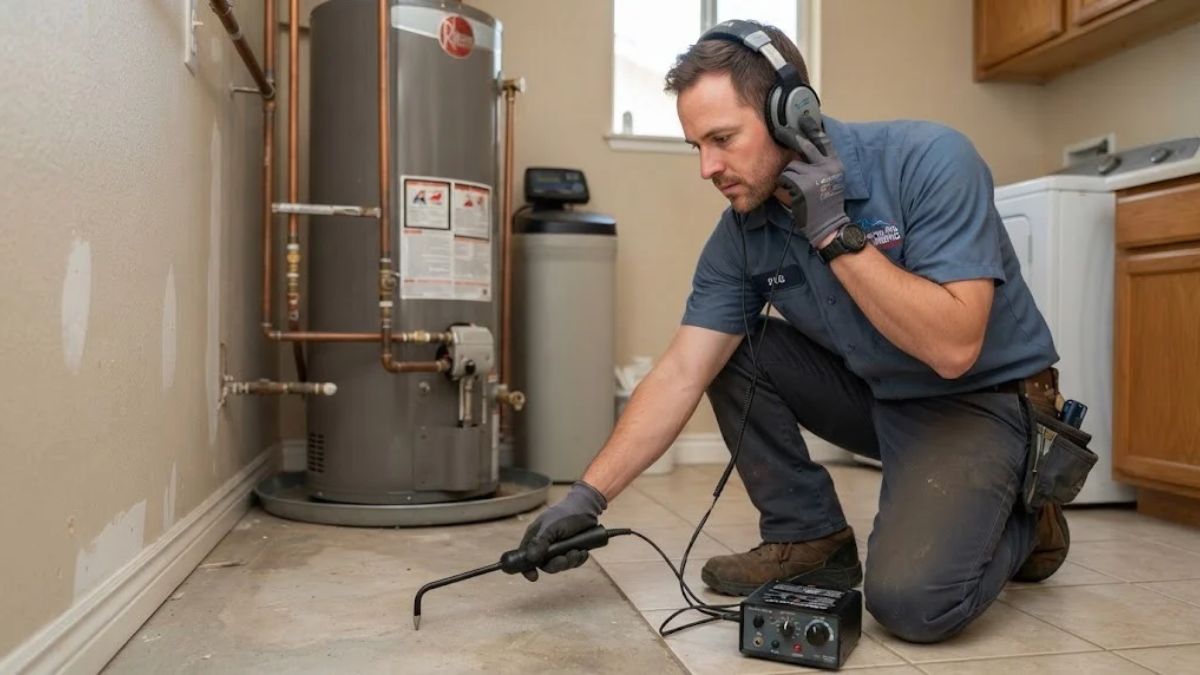
Acoustic listening equipment. Pressurized water escaping a pipe makes a distinct sound that specialized listening devices can pinpoint through concrete, drywall, or soil.
- 3
Thermal imaging. A leak often creates a temperature difference in the surrounding material, which a thermal camera can reveal without cutting into anything.
- 4
Video camera inspection. For sewer and drain lines specifically, a camera run through the pipe shows cracks, joint separation, or root intrusion directly.
Why We Don't Just Start Cutting
Opening up drywall, tile, or concrete on a guess means repairing more than the actual leak required - and sometimes missing the real source entirely if the guess is wrong. Water travels along the path of least resistance once it escapes a pipe, so a wet spot on a wall or floor doesn't always sit directly above or beside the actual leak point.
Proper detection narrows the work to the specific section that actually needs to be opened, which is faster, less disruptive, and less expensive than an exploratory approach.
What Happens Next
Once a leak is located, the repair itself depends on where it is and what caused it - a slab leak goes to our slab leak repair process, a drain or sewer line issue goes to drain cleaning, and if the leak has already caused visible water damage to flooring, drywall, or ceilings, our water damage restoration team handles the cleanup and drying separately from the plumbing fix itself.
Why Detection Usually Pays for Itself
An undetected leak keeps running until it's found, which means the water it wastes shows up on every bill in the meantime - often for weeks or months before anyone notices a pattern rather than assuming a one-off high bill. Detection isn't an added cost on top of the eventual repair.
It's what keeps the repair itself small and targeted instead of exploratory, and it stops the ongoing waste immediately once the source is found. Looked at that way, a detection visit tends to pay for itself well before the repair even begins.
Your Water Meter Is the Fastest First Test
- 1
Turn everything off. Close every tap and pause the dishwasher, washing machine, irrigation, and any ice maker or softener recharge.
- 2
Read the meter. Open the meter box and find the low-flow indicator, usually a small triangle, star, or dial. If it moves with everything off, water is leaving your side of the meter somewhere.
- 3
Check the toilets. Add a few drops of food coloring to each tank and wait 15 minutes without flushing. Color in the bowl means a silent toilet leak, which is a common and inexpensive fix.
- 4
Photograph and call. A photo of the dial now and another an hour later shows how fast water is escaping, which helps us decide how urgent the visit is.
If your water provider sent a high-usage notice or a leak alert, or your bill jumped without any change in habits, mention that when you call. The notice tells us the leak is real, and the meter reading tells us whether it is inside the house or in the buried line.
Buried Water Service Line and Yard Leaks
The pipe that carries water from the meter to your house is buried, and a leak there can run for months without leaving any trace indoors. Clues include a patch of lawn that stays green or soggy when everything around it is dry, weeds growing in a straight line, low pressure at every fixture, a meter that runs while the house is off, or a wet spot around the meter box.
Ask your water provider where its responsibility ends and yours begins, because that dividing point decides who repairs what.
Properties on a private well have no utility meter to test with, so a leak in the line from the well to the house or a barn is found by pressure testing and by listening along the route. This comes up on larger rural lots outside Lancaster's city core. Once we locate the break, we repair it or replace the damaged run, and we explain which one makes sense before work starts.
Ceiling Stains, Wall Moisture, and Leaks From the Room Above
A brown ring on a ceiling, bubbling paint, or a damp wall usually points to a supply or drain line in the cavity above or behind it. The source is often a bathroom on the floor above, a fixture connection, or a drain trap that has started to weep.
The stain is rarely directly under the leak, since water follows framing before it shows itself. We use moisture meters and thermal imaging to trace it back, and in many cases only a small access opening is needed.
If a ceiling is sagging or bulging with trapped water, keep people and pets out from under it and set a bucket below. A leak caught at the stain stage often means a small drywall patch. One found after the ceiling falls usually means a much bigger job.
Under-Floor and Garage Wall Leaks
Most Lancaster homes sit on a concrete slab, but some older and custom homes have raised foundations with a crawlspace, and many garages carry water lines through the walls to a water heater or utility sink. Leaks in these spaces show up as damp insulation, stained subfloor, a musty smell, or a wet spot along a garage wall behind stored items.
If you can safely look into the crawlspace, a flashlight photo of the wettest area helps us plan the visit.
Irrigation, Pool, and Spa Plumbing
When one irrigation zone runs weak, or a valve seems to flow too fast when it opens, the cause is often a broken lateral or a stuck valve under the soil. A hot tub or pool that loses water or leaks near its equipment can have the same kind of buried break. Tell us what is wet and what is dry, since a soggy sprinkler zone beside an otherwise dry yard narrows the search quickly.
Commercial and Multi-Unit Leak Detection
A water bill that keeps climbing at a shopping center, a four-unit rental, or an apartment complex with wet pavement in the parking lot calls for one approach. We isolate sections with shutoff valves, check each building or unit separately, then pinpoint the leak inside the section that is losing water. Tell us how many units or buildings are on the property and who can give access, so the visit can be planned around tenants and business hours.
Need a plumber now? Our line is open 24/7, including nights, weekends, and holidays.
Call (714) 750-8637Questions
An unexplained jump in your water bill is one of the most reliable signs of a hidden leak somewhere in the system - the water meter test is usually the fastest way to confirm it before anything else.
In most cases, yes. Acoustic and thermal detection methods locate a leak's approximate position without opening anything, so the actual repair access point can be targeted precisely.
A straightforward case with a clear meter-test result and an accessible leak location can often be pinpointed in a single visit. More complex cases, such as a leak along a long buried line, may take longer to narrow down.
Yes, though these systems sometimes require a different approach than a household supply line - let us know what you're dealing with when you call so we bring the right equipment.
Yes. Our line is open 24/7. If water is actively damaging a floor, wall, or ceiling, call right away instead of waiting for business hours, and shut off the main valve while you wait if it is safe to do so.
Yes. We isolate the building, unit, or line section that is losing water and pinpoint the leak from there. Tell us the number of units and who can provide access when you call.
Yes. Lines without a utility meter are tested by pressure and by listening along the route. We locate the break first and explain whether a spot repair or a replacement run makes sense.
The price depends on the size of the property and how hard the leak is to reach. Non-emergency estimates are free, and for emergency calls you get clear pricing before any work begins.